

When pressure builds across your forehead and settles behind your cheeks, it’s easy to blame your sinuses. Many people in Tampa Bay reach for a decongestant at the first sign of that ache, especially during allergy season. Yet a sinus headache often turns out to be something else, and treating the wrong problem can leave you hurting for days.
Migraines and sinus headaches share several symptoms, including facial pressure, congestion, and watery eyes. That overlap causes plenty of confusion, even for people who have dealt with recurring headaches for years. Learning how each condition behaves and when to see a specialist can help you find relief that lasts.
Why a Sinus Headache Is Easy to Confuse With a Migraine
Both conditions can cause pain in the same areas of the face, which is why people often mix them up. The difference comes down to what is causing the pain in the first place. Once you understand that root cause, the symptoms start to make more sense.
What Causes a True Sinus Headache
A true sinus headache develops when a sinus infection or inflammation causes swelling in the hollow spaces behind your face. That swelling traps mucus and builds pressure, causing a dull, steady ache in the cheeks, forehead, or nose. This type of headache usually starts during or right after a cold and fades once the infection clears.
How Migraines Mimic Sinus Pain
Migraine is a neurological condition, which means it starts with changes in the brain and nerves. During an attack, the same nerves that supply your face can trigger a runny nose, stuffiness, and pressure around the eyes. Because of this overlap, nearly 9 out of 10 people with recurring sinus headaches meet the criteria for migraine-type headaches.
Key Symptoms That Set Them Apart
Paying close attention to your symptoms is one of the best ways to tell these two headaches apart. Some signs show up with both conditions, while others point clearly in one direction. The details below can help you spot the pattern.
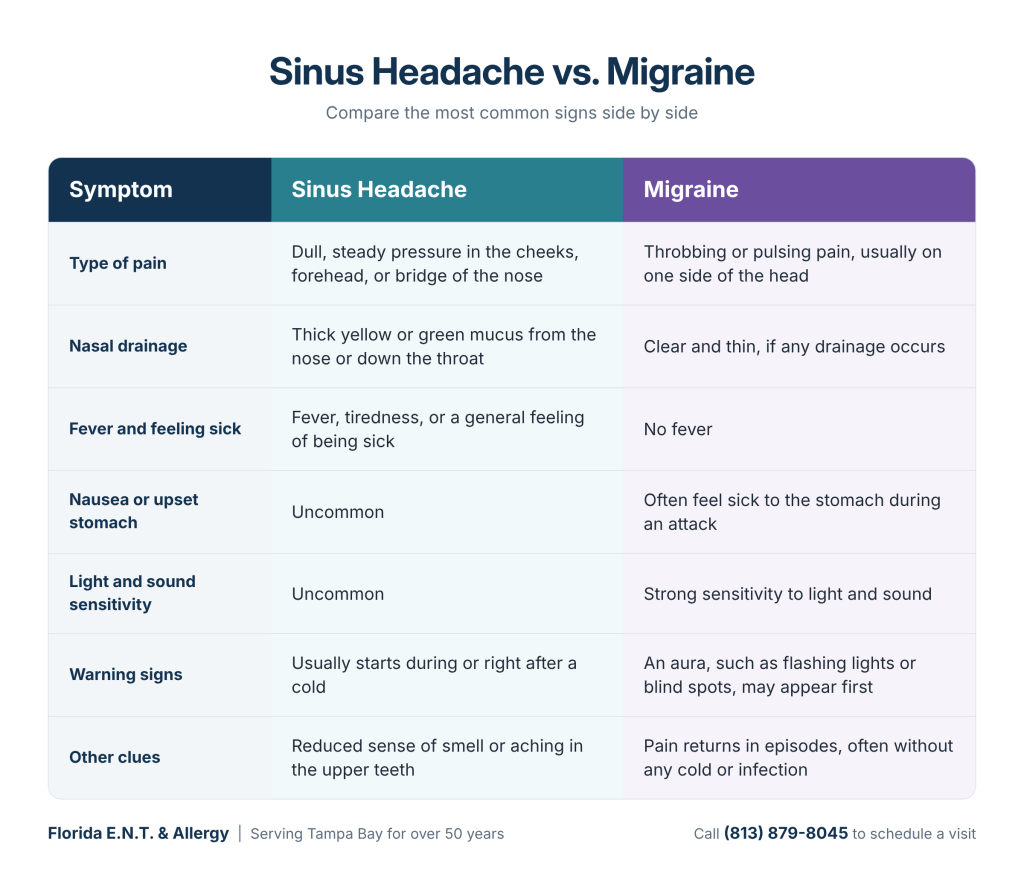 Signs That Point to a Sinus Headache
Most sinus headache symptoms appear alongside other signs of an active infection. Watch for these clues:
- Thick yellow or green mucus draining from your nose or down your throat
- A fever, tiredness, or a general feeling of being sick
- A reduced sense of smell or aching in your upper teeth
Signs That Point to a Migraine
Migraine pain often throbs or pulses, and it typically affects one side of the head in the majority of people. Many people also feel sick to their stomach or become very sensitive to light and sound during an attack. Some notice flashing lights or blind spots beforehand, which doctors call an aura. These common migraine symptoms rarely come with a sinus headache. Any nasal drainage during a migraine also tends to stay clear rather than thick and colored.
Timing and Triggers Tell an Important Story
How long your headache lasts and what sets it off can reveal as much as the symptoms themselves. Migraines and sinus headaches follow very different patterns over time. Tracking those patterns can make the cause much easier to see.
How Long Each Headache Lasts
A migraine attack usually lasts from a few hours to a few days, then fades completely until the next one. A sinus headache tends to last as long as the infection, which often means a week or longer. If your headaches come and go several times a month without a cold, migraine is the more likely cause.
Common Triggers to Watch
Migraines often follow triggers like stress, skipped meals, poor sleep, bright lights, or hormonal changes. Florida’s sudden weather shifts can play a role too, since changes in air pressure can trigger attacks in some people. Sinus headaches usually follow a cold, an allergy flare, or anything else that blocks sinus drainage. Writing down what happened before each headache can help you and your doctor connect the dots.
How an ENT Specialist Finds the Real Cause
Guessing at the source of your headaches can lead to treatments that never quite work. Many people take antibiotics or decongestants again and again without lasting relief. An ENT specialist can look directly at your sinuses and confirm what is really going on.
What to Expect at Your Visit
An evaluation for recurring headaches usually follows a clear process:
- Your specialist reviews how often your headaches occur, how long they last, and what seems to trigger them.
- A physical exam checks your nose and face for swelling, tenderness, or signs of infection.
- A nasal endoscopy, which uses a thin lighted camera, may be used to view the sinus passages up close.
- In-office CT imaging shows whether your sinuses are blocked or inflamed, often with same-day results.
- Your doctor explains the findings and builds a treatment plan around the actual cause.
Why the Right Diagnosis Matters
Sinus headache treatment focuses on clearing infection and reducing swelling. Options include saline rinses, nasal steroid sprays, or antibiotics when bacteria are involved. Depending on symptom severity, surgery may be considered if a sinus cause is confirmed. Migraine care works differently and may include medicine that stops attacks or helps prevent them. When imaging shows healthy sinuses, your ENT can rule out sinus disease and guide you toward migraine care. If your sinuses do show ongoing problems, targeted nose and sinus care can address the source directly.
Getting Answers for Headache Relief in Tampa Bay
Recurring head and facial pain can wear you down, especially when nothing you try seems to help. The right evaluation can bring clarity quickly and save you months of trial and error. Knowing when to seek care is the first step toward feeling better.
When to See a Specialist
Schedule an evaluation if facial pain lasts more than 10 days, keeps coming back, or arrives with a fever. Headaches that happen several times a month or disrupt your work and sleep also deserve a closer look. Seek emergency care for a sudden, severe headache or one with confusion, a stiff neck, vision changes, or numbness.
Same-Day Care Close to Home
When sinus pressure and fever build quickly, same-day ENT urgent care lets you see a specialist without a long ER wait. Florida E.N.T. & Allergy has served Tampa Bay families for over 50 years, with 12 locations across Hillsborough, Pinellas, and Pasco counties. If you are tired of guessing, schedule an appointment today or call (813) 879-8045 for a clear diagnosis and real relief.